Buy binks.eu ?
We are moving the project
binks.eu .
Are you interested in purchasing the domain
binks.eu ?
domain@kv-gmbh.de · 0541-91531010
Buy binks.eu ?
How do you calculate the braking distance, the braking process, and the braking deceleration?
The braking distance can be calculated using the formula: braking distance = (initial velocity^2) / (2 * deceleration), where the deceleration is the rate at which the vehicle slows down. The braking process involves the driver applying the brakes, which causes friction between the brake pads and the wheels, leading to a decrease in the vehicle's speed. The braking deceleration can be calculated by dividing the change in velocity by the time it takes for the vehicle to come to a complete stop. **
How do you calculate the braking time and braking distance?
Braking time and braking distance can be calculated using the formula: Braking distance = (initial velocity^2) / (2 * deceleration) Where initial velocity is the speed of the vehicle before braking, and deceleration is the rate at which the vehicle slows down. Braking time can be calculated by dividing the braking distance by the initial velocity. These calculations are based on the assumption of constant deceleration, and may vary depending on factors such as road conditions and the vehicle's braking system. **

Similar search terms for Braking
Top-Angebote
Products related to Braking:
-
Unique 6 Inch Wide Wall Paint Brush Black Bristle Flat Tip Paint Brush 1 PcPackage includes 1 pack high-quality wall paint brush with a 6-inch wide flat tip, perfect for painting walls, decking, fences, and furniture. It features durable black bristles for use with latex and oil-based paints.25,49 $*Shipping: 0,00 $Secure redirect to the provider
-
Discount Dollar Deals Clear Acrylic Plate Stand, Countertop Display Holder, Tea Brick, Artwork Easel, Magazine Collection Rack lStylish and Functional Acrylic Stand Elevate your collection with the Clear Acrylic Plate Stand, perfect for displaying tea bricks, magazines, artwork, or plates. This elegant, modern display holder is made from durable acrylic, ensuring that your...44,97 $*Shipping: 0,00 $Secure redirect to the provider
-
Fabstyles Printed Sheet Sets - Paint BrushStylish and Cozy: This flannel sheet set features four different patterns on a white background. We offer plenty of pattern options. Stay warm and toasty on the coldest nights of winter and sleep better than ever.54,99 $*Shipping: 0,00 $Secure redirect to the provider
-
Uplift Essentials 42 Color Ultimate UV Neon Face Paint Set Fluorescent Glitter & Art Makeup Palette 42 Color Ultimate UV Neon Face Paint Set Fluorescent Glitter & Art Makeup PaletteCommand the spotlight with the most comprehensive UV Neon Face Paint Set on the market. This massive 42color professional palette is a highoctane blend of fluorescent neons, deep mattes, and dazzling glitter finishes. Engineered for highimpact art...70,97 $*Shipping: 0,00 $Secure redirect to the provider



-
What are the differences between braking to walking speed and braking?
Braking to walking speed typically involves gradually reducing speed until coming to a complete stop, whereas braking refers to the act of slowing down a moving vehicle. When braking to walking speed, the goal is to smoothly decelerate without any sudden stops, while braking may involve more forceful actions to slow down quickly. Additionally, braking to walking speed is often used in situations where a vehicle needs to stop at a precise location, such as at a crosswalk or intersection. **
-
How do you calculate braking time and braking distance in physics?
In physics, braking time and braking distance can be calculated using the equations of motion and the principles of kinematics. The braking time can be calculated using the equation t = v/u, where t is the braking time, v is the final velocity, and u is the initial velocity. The braking distance can be calculated using the equation d = (v^2 - u^2) / (2a), where d is the braking distance and a is the deceleration. These equations take into account the initial and final velocities, as well as the deceleration of the object to determine the braking time and distance. **
-
Is braking a reflex?
Braking can be considered a reflex in certain situations. When a driver reacts to a sudden obstacle or hazard on the road by immediately pressing the brake pedal, it can be seen as a reflexive action. This is because the response is automatic and occurs without conscious thought. However, braking can also be a learned behavior, as drivers are trained to use their brakes in specific situations through practice and experience. Therefore, while braking can be a reflex in some cases, it can also be a learned and intentional action. **
-
What is the difference between a full braking and an emergency braking?
Full braking refers to applying the brakes with maximum force in a controlled manner to slow down or stop the vehicle. This can be done in response to normal traffic conditions or when approaching a stop sign or traffic light. On the other hand, emergency braking is a sudden and forceful application of the brakes in response to an unexpected hazard or danger, such as a pedestrian stepping into the road or a vehicle suddenly stopping in front. Emergency braking is typically done to avoid a collision and requires quick reflexes and a strong, immediate response from the driver. **

What is the formula for braking acceleration and braking time in physics?
The formula for braking acceleration is given by \( a = \frac{v_f - v_i}{t} \), where \( a \) is the braking acceleration, \( v_f \) is the final velocity, \( v_i \) is the initial velocity, and \( t \) is the time taken to come to a stop. The formula for braking time can be calculated using the equation \( t = \frac{v_f - v_i}{a} \), where \( t \) is the braking time. These formulas are used to calculate the rate at which an object slows down when braking. **
What is the difference between braking with a clutch and braking without?
Braking with a clutch involves pressing the clutch pedal while simultaneously applying the brakes, which disengages the engine from the transmission and allows the vehicle to coast to a stop. This method is often used in manual transmission vehicles to prevent stalling. On the other hand, braking without using the clutch means simply applying the brakes without disengaging the engine from the transmission, which can cause the vehicle to stall if the engine speed drops too low. In summary, the main difference is that braking with a clutch allows the vehicle to coast to a stop without stalling, while braking without the clutch can potentially lead to stalling if not done properly. **
Top-Angebote
Products related to Braking:
-
Uplift Essentials Rainbow Professional Face & Body Paint Tray Oil Soluble Artistry Palette Rainbow Professional Face & Body Paint Tray Oil Soluble Artistry PaletteBring your most vibrant visions to life with the Rainbow Colorful Face & Body Paint Tray. This professionalgrade oilsoluble palette is specifically designed for highimpact, detailed artistryfrom intricate butterfly makeup to bold festival designs....71,97 $*Shipping: 0,00 $Secure redirect to the provider
-
Unique 6 Inch Wide Wall Paint Brush Black Bristle Flat Tip Paint Brush 1 PcPackage includes 1 pack high-quality wall paint brush with a 6-inch wide flat tip, perfect for painting walls, decking, fences, and furniture. It features durable black bristles for use with latex and oil-based paints.25,49 $*Shipping: 0,00 $Secure redirect to the provider
-
Discount Dollar Deals Clear Acrylic Plate Stand, Countertop Display Holder, Tea Brick, Artwork Easel, Magazine Collection Rack lStylish and Functional Acrylic Stand Elevate your collection with the Clear Acrylic Plate Stand, perfect for displaying tea bricks, magazines, artwork, or plates. This elegant, modern display holder is made from durable acrylic, ensuring that your...44,97 $*Shipping: 0,00 $Secure redirect to the provider
-
How do you calculate the braking distance, the braking process, and the braking deceleration?
The braking distance can be calculated using the formula: braking distance = (initial velocity^2) / (2 * deceleration), where the deceleration is the rate at which the vehicle slows down. The braking process involves the driver applying the brakes, which causes friction between the brake pads and the wheels, leading to a decrease in the vehicle's speed. The braking deceleration can be calculated by dividing the change in velocity by the time it takes for the vehicle to come to a complete stop. **
-
How do you calculate the braking time and braking distance?
Braking time and braking distance can be calculated using the formula: Braking distance = (initial velocity^2) / (2 * deceleration) Where initial velocity is the speed of the vehicle before braking, and deceleration is the rate at which the vehicle slows down. Braking time can be calculated by dividing the braking distance by the initial velocity. These calculations are based on the assumption of constant deceleration, and may vary depending on factors such as road conditions and the vehicle's braking system. **
-
What are the differences between braking to walking speed and braking?
Braking to walking speed typically involves gradually reducing speed until coming to a complete stop, whereas braking refers to the act of slowing down a moving vehicle. When braking to walking speed, the goal is to smoothly decelerate without any sudden stops, while braking may involve more forceful actions to slow down quickly. Additionally, braking to walking speed is often used in situations where a vehicle needs to stop at a precise location, such as at a crosswalk or intersection. **
-
How do you calculate braking time and braking distance in physics?
In physics, braking time and braking distance can be calculated using the equations of motion and the principles of kinematics. The braking time can be calculated using the equation t = v/u, where t is the braking time, v is the final velocity, and u is the initial velocity. The braking distance can be calculated using the equation d = (v^2 - u^2) / (2a), where d is the braking distance and a is the deceleration. These equations take into account the initial and final velocities, as well as the deceleration of the object to determine the braking time and distance. **
Similar search terms for Braking
-
Fabstyles Printed Sheet Sets - Paint BrushStylish and Cozy: This flannel sheet set features four different patterns on a white background. We offer plenty of pattern options. Stay warm and toasty on the coldest nights of winter and sleep better than ever.54,99 $*Shipping: 0,00 $Secure redirect to the provider
-
Uplift Essentials 42 Color Ultimate UV Neon Face Paint Set Fluorescent Glitter & Art Makeup Palette 42 Color Ultimate UV Neon Face Paint Set Fluorescent Glitter & Art Makeup PaletteCommand the spotlight with the most comprehensive UV Neon Face Paint Set on the market. This massive 42color professional palette is a highoctane blend of fluorescent neons, deep mattes, and dazzling glitter finishes. Engineered for highimpact art...70,97 $*Shipping: 0,00 $Secure redirect to the provider
-
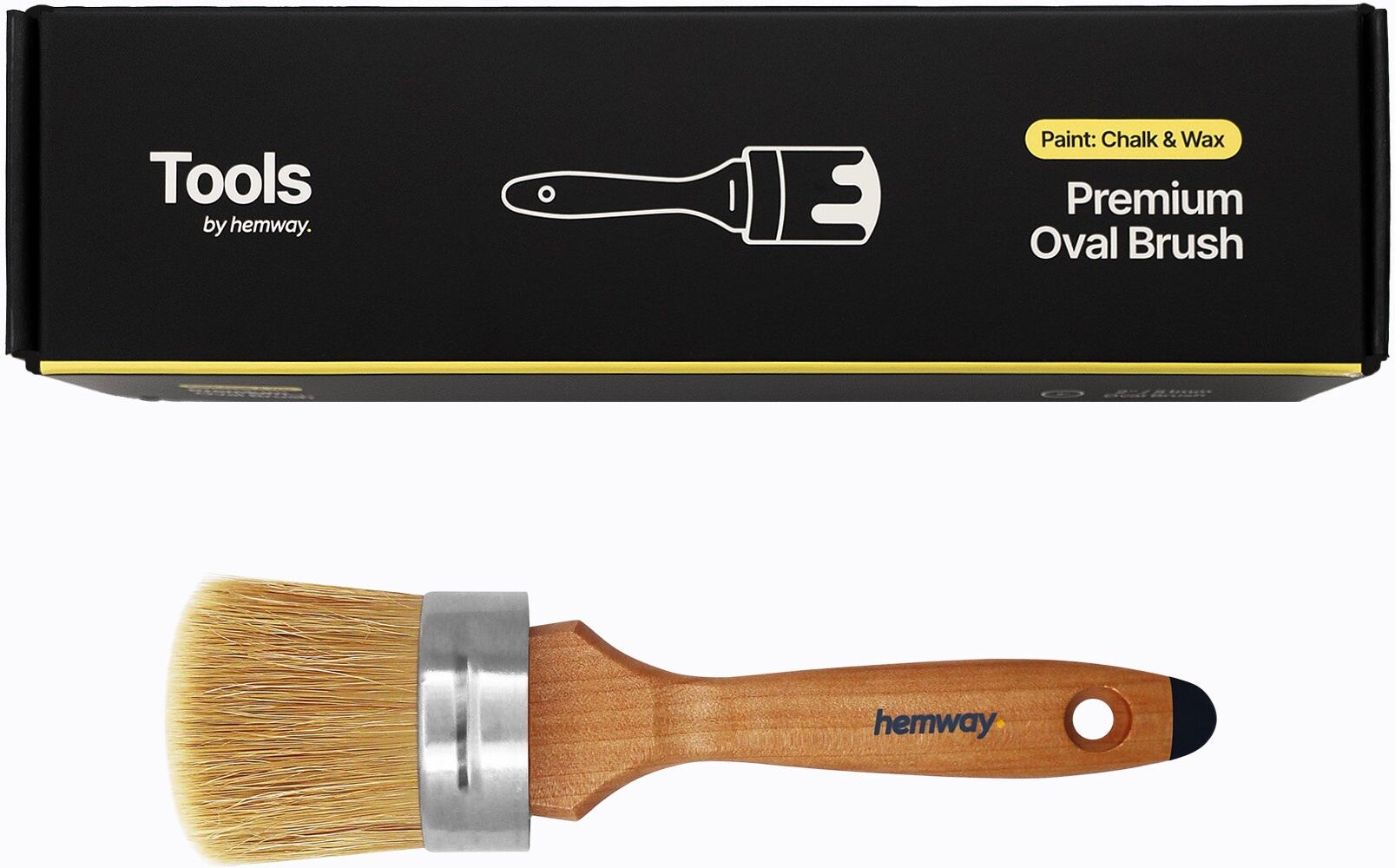
Hemway Chalk Paint Brush Handmade Oval Chalk & Wax Brush - 1 PackAchieve a Flawless Finish with Our Oval Chalk Paint Brush Discover the perfect tool for your DIY and upcycling projects with our Oval Chalk Paint Brush. Specifically designed for versatile use, this brush effortlessly applies chalk paint or wax to a wide range of surfaces. As a result, you’ll achieve smooth and even coverage every time. Whether you're working on furniture, home décor, or intricate details, this brush ensures professional-quality results with ease. Description Premium Oval Chalk Paint Brush for Easy Application This Oval Chalk Paint Brush features a blend of 30% natural and 70% synthetic bristles, designed to maintain shape over time while maximising the amount of paint or wax the brush can hold. Furthermore, the oval-shaped head offers excellent coverage, making it ideal for both large surfaces and detailed work. In addition, the lightweight hardwood handle ensures perfect balance and control for smooth, streak-free application on furniture, cabinets, and more. Specifications: Chalk Paint Brush 2" / 51mm. Bristles: W 2" x L 2" (51mm x 51mm). Handle: L 5.3" (135mm). Brushed stainless ferrule for added durability. Features Key Features of Our Oval Chalk Paint Brush * High-Quality Bristles: 30% natural and 70% synthetic bristles provide excellent paint and wax application. * Comfortable Handle: The lightweight hardwood handle ensures precise control for detailed and large surface applications. * Easy to Clean: Simply rinse thoroughly and hang by the handle to dry, ensuring the brush is ready for future use. * Durable Ferrule: Brushed stainless ferrule for long-lasting performance. This durable design ensures the brush maintains its performance, project after project. How to Use Effective Techniques for Using Your Chalk Paint Brush For chalk paint: Apply your chosen chalk paint using the Oval Chalk Paint Brush. The oval shape is perfect for both broad strokes and intricate details. For the best results, we recommend using Hemway Chalk Paint or Hemway Chalk Based Furniture Paint. For wax finishing: Once your paint has dried, use the brush to apply wax or lacquer for a smooth, protective finish. Additionally, for optimal results, try Hemway Water-Based Eco Lacquer. After use, rinse the brush thoroughly with water for paint or the appropriate solvent for wax. Furthermore, hang it by the handle to dry, preserving the bristle shape and ensuring brush quality for future projects. Recyclable Sustainable Packaging for Eco-Friendly Crafting We prioritise sustainability, and our packaging reflects this commitment. Therefore, our materials are fully recyclable or made from recycled materials, including: * Delivery Boxes * Labels * Pulp Fittings We focus on lowering our environmental impact with sustainable packaging choices. Additional Information Important Notes About Our Oval Chalk Paint11,95 £*Shipping: 0,00 £Secure redirect to the provider
-
Discount Dollar Deals Clear Acrylic Plate Stand, Countertop Display Holder, Tea Brick, Artwork Easel, Magazine Collection Rack sStylish and Functional Acrylic Stand Elevate your collection with the Clear Acrylic Plate Stand, perfect for displaying tea bricks, magazines, artwork, or plates. This elegant, modern display holder is made from durable acrylic, ensuring that your...28,97 $*Shipping: 0,00 $Secure redirect to the provider
-
Is braking a reflex?
Braking can be considered a reflex in certain situations. When a driver reacts to a sudden obstacle or hazard on the road by immediately pressing the brake pedal, it can be seen as a reflexive action. This is because the response is automatic and occurs without conscious thought. However, braking can also be a learned behavior, as drivers are trained to use their brakes in specific situations through practice and experience. Therefore, while braking can be a reflex in some cases, it can also be a learned and intentional action. **
-
What is the difference between a full braking and an emergency braking?
Full braking refers to applying the brakes with maximum force in a controlled manner to slow down or stop the vehicle. This can be done in response to normal traffic conditions or when approaching a stop sign or traffic light. On the other hand, emergency braking is a sudden and forceful application of the brakes in response to an unexpected hazard or danger, such as a pedestrian stepping into the road or a vehicle suddenly stopping in front. Emergency braking is typically done to avoid a collision and requires quick reflexes and a strong, immediate response from the driver. **
-
What is the formula for braking acceleration and braking time in physics?
The formula for braking acceleration is given by \( a = \frac{v_f - v_i}{t} \), where \( a \) is the braking acceleration, \( v_f \) is the final velocity, \( v_i \) is the initial velocity, and \( t \) is the time taken to come to a stop. The formula for braking time can be calculated using the equation \( t = \frac{v_f - v_i}{a} \), where \( t \) is the braking time. These formulas are used to calculate the rate at which an object slows down when braking. **
-
What is the difference between braking with a clutch and braking without?
Braking with a clutch involves pressing the clutch pedal while simultaneously applying the brakes, which disengages the engine from the transmission and allows the vehicle to coast to a stop. This method is often used in manual transmission vehicles to prevent stalling. On the other hand, braking without using the clutch means simply applying the brakes without disengaging the engine from the transmission, which can cause the vehicle to stall if the engine speed drops too low. In summary, the main difference is that braking with a clutch allows the vehicle to coast to a stop without stalling, while braking without the clutch can potentially lead to stalling if not done properly. **
* All prices are inclusive of VAT and, if applicable, plus shipping costs. The offer information is based on the details provided by the respective shop and is updated through automated processes. Real-time updates do not occur, so deviations can occur in individual cases. ** Note: Parts of this content were created by AI.