Buy binks.eu ?
We are moving the project
binks.eu .
Are you interested in purchasing the domain
binks.eu ?
domain@kv-gmbh.de · 0541-91531010
Buy binks.eu ?
What are Van der Waals bonds?
Van der Waals bonds are weak intermolecular forces that occur between molecules. These bonds are caused by the temporary dipoles that form in molecules due to the uneven distribution of electrons. Van der Waals bonds are responsible for the attraction between molecules and contribute to properties such as boiling and melting points, as well as the physical state of a substance. While they are weaker than covalent or ionic bonds, Van der Waals bonds still play a significant role in determining the behavior of molecules and their interactions with one another. **
What is the van der Waals interaction?
Van der Waals interactions are weak attractive forces that exist between molecules. These interactions are caused by fluctuations in electron distribution within molecules, leading to temporary dipoles. The three main types of van der Waals interactions are London dispersion forces, dipole-dipole interactions, and hydrogen bonding. These interactions play a crucial role in determining the physical properties of substances, such as boiling and melting points. **


Similar search terms for Waals
Top-Angebote
Products related to Waals:
-
Uplift Essentials Rainbow Professional Face & Body Paint Tray Oil Soluble Artistry Palette Rainbow Professional Face & Body Paint Tray Oil Soluble Artistry PaletteBring your most vibrant visions to life with the Rainbow Colorful Face & Body Paint Tray. This professionalgrade oilsoluble palette is specifically designed for highimpact, detailed artistryfrom intricate butterfly makeup to bold festival designs....71,97 $*Shipping: 0,00 $Secure redirect to the provider
-
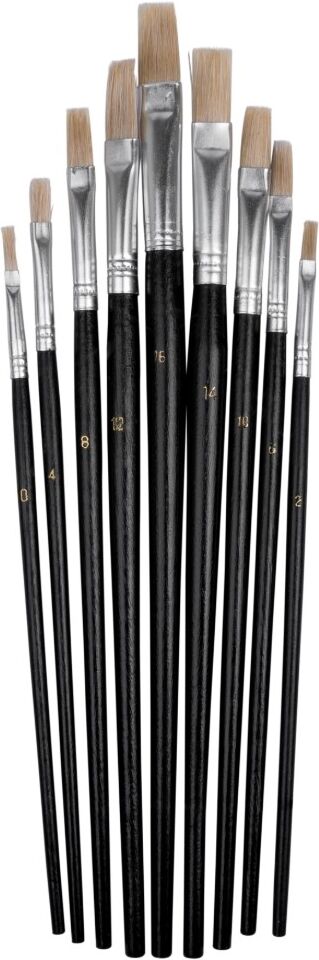
Unique 6 Inch Wide Wall Paint Brush Black Bristle Flat Tip Paint Brush 1 PcPackage includes 1 pack high-quality wall paint brush with a 6-inch wide flat tip, perfect for painting walls, decking, fences, and furniture. It features durable black bristles for use with latex and oil-based paints.25,49 $*Shipping: 0,00 $Secure redirect to the provider
-
Verona Cream, Taupe & Gold Abstract Paint Brush Effect Textured Canvas Wall ArtTransform any room into a stylish haven with the Verona Cream, Taupe & Gold Abstract Paint Brush Effect Textured Canvas Wall Art. This captivating piece showcases a striking blend of cream, taupe, and gold hues with a paintbrush effect, adding depth and dimension to your space. Perfect for contemporary interiors, this canvas art enhances your decor with its modern elegance. Dimensions: H90 x W60cm64,00 £*Shipping: 4,99 £Secure redirect to the provider



-
How do Van der Waals forces arise?
Van der Waals forces arise due to the fluctuating electric charges within molecules. These forces are caused by the temporary dipoles that form when the electrons in a molecule are not evenly distributed, creating a temporary imbalance of charge. These temporary dipoles can induce similar dipoles in neighboring molecules, leading to an attractive force between the molecules. Van der Waals forces are responsible for the attraction between non-polar molecules and are weaker than covalent or ionic bonds. **
-
What are Van der Waals forces in chemistry?
Van der Waals forces are weak intermolecular forces that occur between atoms and molecules. These forces are responsible for the attraction and repulsion between molecules, and they play a significant role in determining the physical properties of substances, such as boiling and melting points. Van der Waals forces include dipole-dipole interactions, London dispersion forces, and hydrogen bonding. These forces are important in understanding the behavior of gases, liquids, and solids in chemistry. **
-
What are the van der Waals forces in ethane?
In ethane, the van der Waals forces are London dispersion forces. These forces are caused by temporary fluctuations in electron distribution within molecules, leading to temporary dipoles. In ethane, the nonpolar nature of the molecule results in weak London dispersion forces being the predominant van der Waals forces present. These forces are responsible for holding ethane molecules together and are weaker than other types of intermolecular forces like hydrogen bonding. **
-
What are Van der Waals forces and hydrogen bonds?
Van der Waals forces are weak intermolecular forces that exist between atoms and molecules due to temporary fluctuations in electron distribution. These forces include London dispersion forces, dipole-dipole interactions, and hydrogen bonding. Hydrogen bonds are a specific type of intermolecular force that occurs when a hydrogen atom is covalently bonded to a highly electronegative atom (such as oxygen, nitrogen, or fluorine) and forms an electrostatic interaction with another electronegative atom. Hydrogen bonds are stronger than typical Van der Waals forces and play a crucial role in the structure and properties of many biological molecules, such as DNA and proteins. **


What is the Van der Waals equation in chemistry?
The Van der Waals equation is an equation of state in chemistry that accounts for the non-ideal behavior of gases. It is an improvement over the ideal gas law by incorporating corrections for the volume occupied by gas molecules and the attractive forces between them. The equation is expressed as (P + a(n^2/V^2))(V - nb) = nRT, where P is the pressure, V is the volume, n is the number of moles, T is the temperature, a and b are Van der Waals constants, and R is the gas constant. This equation provides a more accurate description of the behavior of real gases under various conditions. **
In which molecules do van der Waals forces occur?
Van der Waals forces occur in molecules that have non-polar covalent bonds or molecules that are non-polar in nature. These forces are the weakest type of intermolecular forces and are caused by temporary fluctuations in electron distribution within a molecule. Examples of molecules where van der Waals forces occur include noble gases like helium, neon, and argon, as well as hydrocarbons like methane and ethane. **
Top-Angebote
Products related to Waals:
-
Uplift Essentials Rainbow Professional Face & Body Paint Tray Oil Soluble Artistry Palette Rainbow Professional Face & Body Paint Tray Oil Soluble Artistry PaletteBring your most vibrant visions to life with the Rainbow Colorful Face & Body Paint Tray. This professionalgrade oilsoluble palette is specifically designed for highimpact, detailed artistryfrom intricate butterfly makeup to bold festival designs....71,97 $*Shipping: 0,00 $Secure redirect to the provider
-
What are Van der Waals bonds?
Van der Waals bonds are weak intermolecular forces that occur between molecules. These bonds are caused by the temporary dipoles that form in molecules due to the uneven distribution of electrons. Van der Waals bonds are responsible for the attraction between molecules and contribute to properties such as boiling and melting points, as well as the physical state of a substance. While they are weaker than covalent or ionic bonds, Van der Waals bonds still play a significant role in determining the behavior of molecules and their interactions with one another. **
-
What is the van der Waals interaction?
Van der Waals interactions are weak attractive forces that exist between molecules. These interactions are caused by fluctuations in electron distribution within molecules, leading to temporary dipoles. The three main types of van der Waals interactions are London dispersion forces, dipole-dipole interactions, and hydrogen bonding. These interactions play a crucial role in determining the physical properties of substances, such as boiling and melting points. **
-
How do Van der Waals forces arise?
Van der Waals forces arise due to the fluctuating electric charges within molecules. These forces are caused by the temporary dipoles that form when the electrons in a molecule are not evenly distributed, creating a temporary imbalance of charge. These temporary dipoles can induce similar dipoles in neighboring molecules, leading to an attractive force between the molecules. Van der Waals forces are responsible for the attraction between non-polar molecules and are weaker than covalent or ionic bonds. **
-
What are Van der Waals forces in chemistry?
Van der Waals forces are weak intermolecular forces that occur between atoms and molecules. These forces are responsible for the attraction and repulsion between molecules, and they play a significant role in determining the physical properties of substances, such as boiling and melting points. Van der Waals forces include dipole-dipole interactions, London dispersion forces, and hydrogen bonding. These forces are important in understanding the behavior of gases, liquids, and solids in chemistry. **
Similar search terms for Waals
-
Unique 6 Inch Wide Wall Paint Brush Black Bristle Flat Tip Paint Brush 1 PcPackage includes 1 pack high-quality wall paint brush with a 6-inch wide flat tip, perfect for painting walls, decking, fences, and furniture. It features durable black bristles for use with latex and oil-based paints.25,49 $*Shipping: 0,00 $Secure redirect to the provider
-
Verona Cream, Taupe & Gold Abstract Paint Brush Effect Textured Canvas Wall ArtTransform any room into a stylish haven with the Verona Cream, Taupe & Gold Abstract Paint Brush Effect Textured Canvas Wall Art. This captivating piece showcases a striking blend of cream, taupe, and gold hues with a paintbrush effect, adding depth and dimension to your space. Perfect for contemporary interiors, this canvas art enhances your decor with its modern elegance. Dimensions: H90 x W60cm64,00 £*Shipping: 4,99 £Secure redirect to the provider
-
Verona Cream, Chocolate & Bronze Abstract Paint Brush Effect Textured Canvas Wall ArtTransform any room into a stylish haven with the Verona Cream, Chocolate & Bronze Abstract Paint Brush Effect Textured Canvas Wall Art. This captivating piece showcases a striking blend of cream, chocolate, and Bronze hues with a paintbrush effect, adding depth and dimension to your space. Perfect for contemporary interiors, this canvas art enhances your decor with its modern elegance. Dimensions: H90 x W60cm64,00 £*Shipping: 4,99 £Secure redirect to the provider
-
Verona Black, Taupe & White Abstract Paint Brush Effect Textured Canvas Wall ArtTransform any room into a stylish haven with the Verona Black, Taupe & White Abstract Paint Brush Effect Textured Canvas Wall Art. This captivating piece showcases a striking blend of black, taupe, and white hues with a paintbrush effect, adding depth and dimension to your space. Perfect for contemporary interiors, this canvas art enhances your decor with its modern elegance. *Please note, each piece is handpainted so there may be very slight variations from our image. Dimensions: H90 x W60cm64,00 £*Shipping: 4,99 £Secure redirect to the provider
-
What are the van der Waals forces in ethane?
In ethane, the van der Waals forces are London dispersion forces. These forces are caused by temporary fluctuations in electron distribution within molecules, leading to temporary dipoles. In ethane, the nonpolar nature of the molecule results in weak London dispersion forces being the predominant van der Waals forces present. These forces are responsible for holding ethane molecules together and are weaker than other types of intermolecular forces like hydrogen bonding. **
-
What are Van der Waals forces and hydrogen bonds?
Van der Waals forces are weak intermolecular forces that exist between atoms and molecules due to temporary fluctuations in electron distribution. These forces include London dispersion forces, dipole-dipole interactions, and hydrogen bonding. Hydrogen bonds are a specific type of intermolecular force that occurs when a hydrogen atom is covalently bonded to a highly electronegative atom (such as oxygen, nitrogen, or fluorine) and forms an electrostatic interaction with another electronegative atom. Hydrogen bonds are stronger than typical Van der Waals forces and play a crucial role in the structure and properties of many biological molecules, such as DNA and proteins. **
-
What is the Van der Waals equation in chemistry?
The Van der Waals equation is an equation of state in chemistry that accounts for the non-ideal behavior of gases. It is an improvement over the ideal gas law by incorporating corrections for the volume occupied by gas molecules and the attractive forces between them. The equation is expressed as (P + a(n^2/V^2))(V - nb) = nRT, where P is the pressure, V is the volume, n is the number of moles, T is the temperature, a and b are Van der Waals constants, and R is the gas constant. This equation provides a more accurate description of the behavior of real gases under various conditions. **
-
In which molecules do van der Waals forces occur?
Van der Waals forces occur in molecules that have non-polar covalent bonds or molecules that are non-polar in nature. These forces are the weakest type of intermolecular forces and are caused by temporary fluctuations in electron distribution within a molecule. Examples of molecules where van der Waals forces occur include noble gases like helium, neon, and argon, as well as hydrocarbons like methane and ethane. **
* All prices are inclusive of VAT and, if applicable, plus shipping costs. The offer information is based on the details provided by the respective shop and is updated through automated processes. Real-time updates do not occur, so deviations can occur in individual cases. ** Note: Parts of this content were created by AI.